A school backpack carries more than books. When it is poorly fitted, overloaded, or worn incorrectly, it can place unnecessary strain on a child’s shoulders and back and make carrying school supplies uncomfortable.
If you have noticed your child leaning forward while walking, struggling to put on a backpack, or complaining of back or shoulder discomfort after school, it may be time to check how the backpack fits and what your child carries each day.
Understanding the connection between heavy backpack back pain, backpack fit, and carrying habits can help parents make practical changes that support their child’s comfort.
Can a Heavy Backpack Cause Back Pain in Children?
A heavy or poorly fitted backpack can contribute to discomfort in a child’s back, shoulders, and neck. The weight may pull the child backward, encouraging them to lean forward to compensate. Uneven straps or carrying a bag over one shoulder can also distribute the load unevenly.
However, backpack weight is not the only possible cause of back pain. Activity levels, muscle strain, injuries, prolonged sitting, and other factors can contribute to discomfort.
Parents should avoid assuming that a backpack is the sole cause of a child’s symptoms. If pain persists, keeps returning, or affects everyday activities, seek advice from an appropriate healthcare professional.
How to Tell If Your Child's Backpack Is Too Heavy
Pay attention to how your child carries the backpack and whether it appears comfortable to wear.
Possible warning signs include:
- Leaning noticeably forward while walking with the backpack
- Struggling to put the backpack on or take it off
- Shoulder straps digging into the shoulders
- Complaints of back, neck, or shoulder discomfort after carrying the bag
- Difficulty walking comfortably while wearing the backpack
- Carrying the backpack consistently over one shoulder
These signs do not establish a diagnosis, but they can indicate that the bag’s weight, fit, or carrying method needs attention.
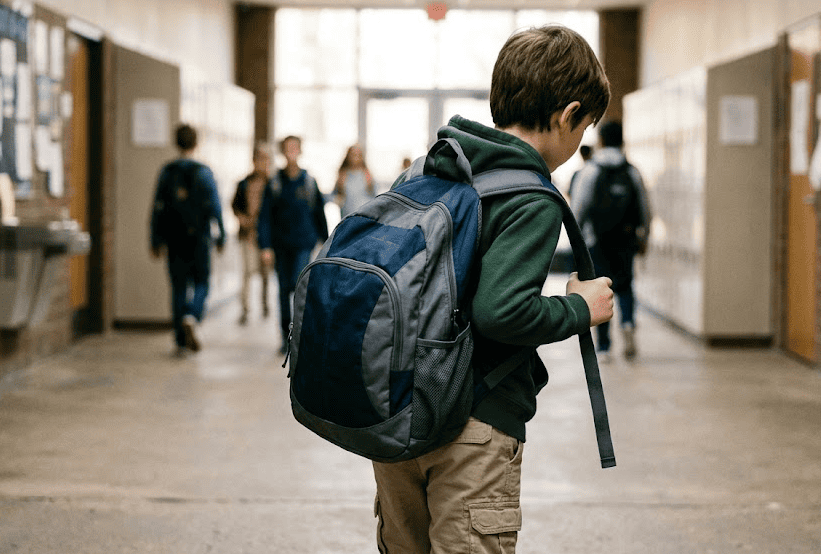
Ask your child how the backpack feels rather than relying only on its appearance. Children may not mention discomfort unless someone asks.
What Is the Recommended Backpack Weight for School children?
A commonly used guideline from pediatric and school-health resources is to keep a school backpack at approximately 10%–15% of a child’s body weight. For example, a child who weighs 80 pounds would carry approximately 8–12 pounds under this guideline.
This is a general reference, not a guarantee that a backpack within that range will be comfortable for every child. Individual tolerance, bag design, fit, and the distance carried also matter.
Parents can weigh the packed backpack if they are unsure how heavy it is. If the load seems excessive or causes discomfort, look for ways to reduce it and discuss alternatives with the school when necessary.
How Should a Backpack Fit a Child?
A well-fitted backpack should sit comfortably against the child’s back without hanging too low or pulling the shoulders backward.
Use these practical checks when adjusting the bag.
1. Use Both Shoulder Straps
Encourage your child to wear the backpack with both shoulder straps rather than carrying it on one shoulder. This helps distribute the load more evenly.
2. Adjust the Straps
The shoulder straps should fit securely without digging into the shoulders. Tighten or loosen them so the backpack rests close to the body.
3. Check the Backpack's Height
The backpack should not hang excessively below the child’s lower back. Adjust the straps to keep the bag positioned comfortably and securely.
4. Choose a Padded Back and Wide Straps
Padded shoulder straps and a supportive back panel can improve comfort. A waist or chest strap may also help stabilize the load, depending on the backpack design and the child’s needs.
5. Consider the Bag's Size
A backpack should be appropriate for the child’s size. A bag that is too large can encourage overpacking and may be more difficult to carry comfortably.
How to Make a School Backpack Lighter
A few simple habits can help reduce unnecessary weight.
- Pack only what is needed: Review the contents with your child and remove unnecessary items.
- Place heavier items close to the back: This can help keep the load closer to the body.
- Use compartments: Distributing items appropriately can prevent the bag from becoming unbalanced.
- Coordinate with teachers: Ask whether duplicate classroom supplies, digital materials, or leaving certain books at school is possible.
- Recheck the bag regularly: Contents can accumulate throughout the week, so make backpack checks part of the school routine.
A rolling backpack may be an option in some situations, although stairs, school policies, and the child’s route should be considered before choosing one.
Can Backpack Habits Affect a Child's Posture?
Carrying an uncomfortable or heavy backpack may cause a child to change how they stand or walk temporarily to compensate for the load. Uneven straps and a bag that hangs too low can also make carrying it less comfortable.
Parents can encourage children to use both straps, adjust the fit, and take unnecessary weight out of the bag. Regular physical activity and age-appropriate movement breaks can also support general physical well-being.
It is important not to assume that ordinary backpack use causes permanent posture problems or spinal damage. If your child consistently appears uncomfortable, has ongoing pain, or moves differently even without the backpack, consider arranging a professional assessment.
When Should Parents Seek Professional Advice?
Occasional discomfort after carrying a heavy bag may improve after adjusting the fit and reducing the load. However, ongoing or recurring pain deserves attention.
Consider contacting a healthcare professional if your child experiences:
- Back or shoulder pain that persists or repeatedly returns
- Pain that interferes with school, sleep, sports, or normal activities
- Pain following a fall or other injury
- Numbness, tingling, weakness, or difficulty walking
Seek urgent medical assessment for severe pain, significant weakness, or other concerning symptoms, especially when symptoms develop suddenly or follow an injury.
A healthcare professional can help determine whether the symptoms are related to carrying habits or whether another cause needs to be evaluated.
How Pediatric Chiropractic Care Fits Into Your Child's Care
Parents looking into a child’s back discomfort may have questions about which type of professional evaluation is appropriate. The right next step depends on the child’s symptoms, medical history, age, and the circumstances surrounding the pain.
Pediatric chiropractic care involves evaluating a child’s individual needs rather than assuming that every child with discomfort needs the same approach. Parents should discuss the proposed evaluation, techniques, expected benefits, limitations, and potential risks with the provider before deciding on care.
At True Grit Health Center in Wentzville, families can learn more about the practice’s pediatric chiropractic services and ask questions about whether an evaluation may be appropriate for their child.
Learn About Pediatric Chiropractic Care
If your child has persistent pain, significant symptoms, or a possible injury, seek appropriate medical evaluation rather than relying on backpack adjustments or chiropractic care alone.
Help Your Child Carry Their Backpack More Comfortably
A backpack that fits properly, weighs an appropriate amount, and is packed thoughtfully can make school-day carrying more comfortable. Check the weight, adjust both straps, remove unnecessary supplies, and ask your child regularly whether the bag feels comfortable.
If discomfort continues after making these changes, consider seeking professional advice to identify the cause and determine the appropriate next steps.
Parents who would like to learn more about True Grit‘s pediatric chiropractic services can explore the Pediatric Chiropractic Care page or contact True Grit Health Center with questions.