Can chiropractic care help sciatica? In most cases, yes — sciatica is almost always caused by pressure on a nerve, and chiropractic adjustments are built specifically to relieve that kind of pressure. If pain is running from your lower back down through your hip and leg, chiropractic care is usually a good next step to explore.
Below, we’ll walk through how to tell sciatica apart from regular back pain, what’s actually compressing the nerve, what a realistic recovery timeline looks like, and how to manage it day to day while you heal.
Is It Sciatica, or Just Back Pain?
Not every ache in your lower back is sciatica — and the distinction matters for treatment. Here’s a quick way to tell them apart:
| Regular Lower Back Pain | Sciatica |
| Stays localized to the lower back | Radiates down through the hip and into the leg, often past the knee |
| Feels like soreness, stiffness, or a dull ache | Often sharp, burning, or electric — sometimes described as a “shooting” pain |
| Usually affects both sides evenly | Almost always one-sided |
| Rarely comes with numbness | Frequently paired with numbness, tingling, or leg weakness |
If your symptoms line up with the right-hand column, it’s a strong sign the sciatic nerve is involved, not just a strained muscle.
What's Actually Compressing the Nerve?
The sciatic nerve is the longest nerve in your body, running from your lower spine through your glutes and down each leg. Sciatica happens when something presses on that nerve near its root. The most common sources we see in Wentzville patients:
A herniated or bulging disc pushing directly onto the nerve root — the leading cause of sciatica.
Spinal misalignment that narrows the space where the nerve exits the spine.
A tight piriformis muscle in the glute compressing the nerve as it passes nearby (piriformis syndrome).
Extended sitting — long commutes or desk hours load the lower spine and glutes for hours at a stretch.
Pregnancy, where added weight and shifting posture increase pressure on the lower spine.
Age-related spinal narrowing (spinal stenosis), which gradually reduces the space around the nerve.
Different causes call for slightly different approaches, which is why identifying the actual source matters more than just treating “back pain” generically.
So, Can Chiropractic Care Help Sciatica? Here's Our Approach
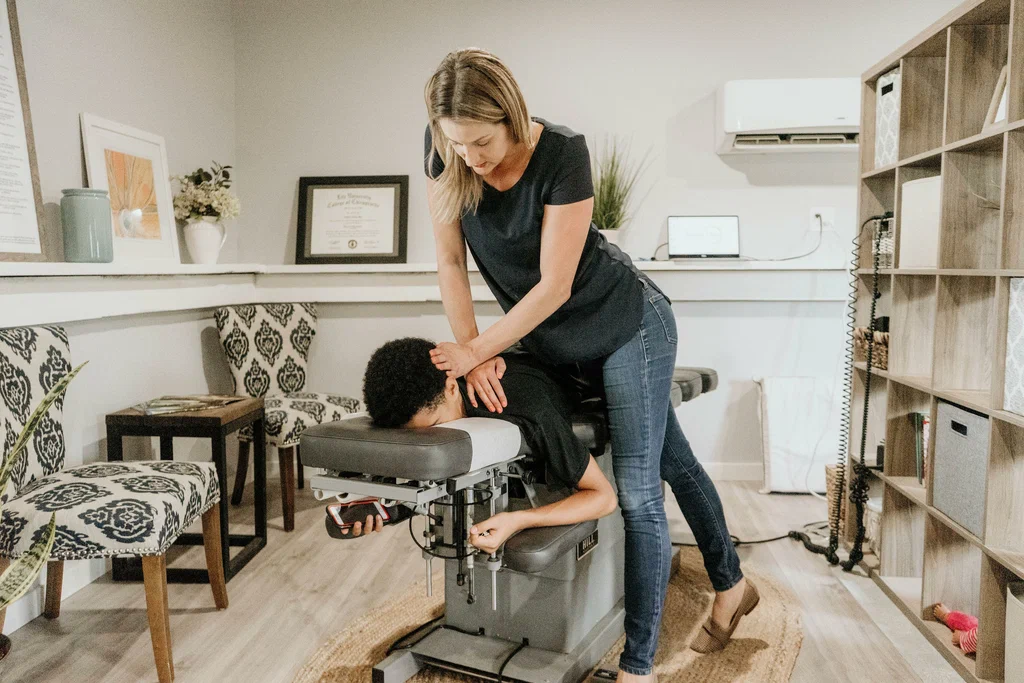
Treatment starts with pinpointing exactly where the compression is coming from — disc, alignment, or muscular — since that changes the plan. From there, care typically combines a few elements: targeted spinal adjustments to relieve pressure at the nerve root, soft tissue work to release tight muscles compounding the irritation, and specific stretches or movement guidance to keep the nerve from re-compressing between visits.
This combination matters more with sciatica than with most conditions, because a single adjustment rarely resolves nerve compression on its own — it’s the consistency of care over several visits that tends to produce lasting relief.
How Long Does It Actually Take to Feel Better?
When patients ask “can chiropractic care help sciatica that’s already lasted months?” — the honest answer depends on the cause. Sciatica from a tight piriformis or short-term misalignment often eases within a handful of visits. Disc-related sciatica typically takes longer — sometimes several weeks of consistent care — because the disc itself needs time to settle even after nerve pressure starts to ease.
A few signs recovery is on track: less pain radiating below the knee, longer stretches of comfortable sitting or standing, and fewer flare-ups between visits. If symptoms plateau or worsen despite consistent care, that’s worth flagging so your plan can be adjusted.

Living With Sciatica While You Heal
A few adjustments that tend to make daily life more manageable between visits:
- Break up long sitting. Stand or walk for a couple minutes every 30 minutes if your job or commute keeps you seated.
- Avoid deep couch sinking. Soft, low seating tends to increase pressure on the lower spine — a firmer chair with good back support is easier on the nerve.
- Sleep on your side with a pillow between your knees. This keeps the spine in a more neutral position overnight.
- Skip heavy twisting or bending under load until pain has meaningfully improved, since these movements tend to aggravate disc-related sciatica specifically.
- Stay gently active. Complete bed rest tends to slow recovery — short walks are usually better tolerated than prolonged inactivity.
🚩 When Sciatica Needs Emergency Care, Not a Chiropractor
We start with a consultation and a neurological evaluation to understand what’s actually driving your neck pain — not just where it hurts, but why. From there, we build a care plan specific to your situation, whether that’s occasional tension from your job, an old sports injury that never fully resolved, or something more recent like an accident. Adjustments are gentle, and most patients feel some relief in tension and mobility within the first few visits. If you’re a parent bringing in the whole family, our family chiropractic care covers everyone from kids to grandparents under one care plan.
Seek emergency medical care immediately if you experience:
- Loss of bladder or bowel control
- Numbness in the groin or inner thigh (saddle numbness)
- Significant weakness in both legs
These can indicate a rare but serious condition called cauda equina syndrome, which requires urgent medical attention rather than chiropractic care.
Frequently Asked Questions
Can chiropractic care help sciatica caused by a herniated disc?
In most cases, yes. According to the National Library of Medicine, sciatica is a symptom of pressure on the sciatic nerve rather than a condition on its own — and a herniated disc is one of the most common sources of that pressure. Chiropractic adjustments are often used specifically to relieve that nerve compression, though your chiropractor will confirm this is appropriate based on your evaluation.
Can sciatica come back after it's treated?
It can, especially if the underlying trigger — like prolonged sitting or repeated heavy bending — isn’t addressed alongside treatment. That’s why care plans usually include movement guidance, not just adjustments.
Will I need imaging like an MRI before starting care?
Not always. Many cases of sciatica can be evaluated and treated based on a physical and neurological exam. Imaging is typically reserved for cases that aren’t responding as expected or show signs of something more significant.
Get Sciatica Evaluated in Wentzville, MO
Still wondering, “can chiropractic care help sciatica” in your specific case? The sooner nerve compression is addressed, the easier it typically is to resolve. Contact True Grit Health Center to schedule an evaluation and get a clear answer on what’s actually causing your pain.